After the Machine Arrives at Your Factory: A Practical Guide to LIANXIN Remote Support, Commissioning Guidance, Operator Training, and Spare-Parts Arrangements for Injection and Stretch Blow Molding Projects
LIANXIN approaches post-delivery support within the contract scope. For a machine arriving at your factory, the company can provide installation guidance, commissioning, and operator training as agreed in the contract. It also provides spare parts and wear parts support corresponding to the contract scope.
Where remote support is used, LIANXIN generally gives an initial response within 24 hours after receiving the support information. That 24-hour point is an initial-response expectation, not a promise that the issue will be solved within 24 hours.
The practical answer, therefore, is to treat remote support, training, and spare-parts coverage as three linked parts of the same contract-defined service arrangement rather than as separate blanket offers. LIANXIN is a plastics machinery manufacturer based in Zhangjiagang, Jiangsu, and focuses on injection blow molding (IBM) and injection stretch blow molding (ISBM/BPET) machines.
That product context matters because the useful questions after delivery are specific: who joins the commissioning discussion, which operators are trained, what the training covers, and which spare and wear parts are included in the agreed scope. The contract and the agreed service scope are the reference points for those answers.
Post-Delivery Support: What Is Contract-Led and What You Should Confirm
The first distinction to make is between support that LIANXIN can provide under a contract and support that is assumed to be automatic. LIANXIN can provide installation guidance, commissioning, and operator training as agreed in the contract. This wording matters: the contract defines which activities are included, when they take place, and how they are delivered. It also defines the sequence and the responsibilities of both sides. A buyer should therefore read the post-delivery section as an operating plan, not as a general brochure statement.
The same principle applies to spare parts. LIANXIN provides spare parts and wear parts support corresponding to the contract scope. The contract scope is the reference for which parts are covered, how they are identified, and how the support is organized.
Remote support is best understood as a communication and response channel, not as a guarantee of remote resolution. LIANXIN generally provides an initial response within 24 hours after receiving remote support information. The 24-hour mark is specifically an initial-response point. It does not mean that the fault will be identified, a part will be shipped, or the machine will be back in production within 24 hours.
For the factory team, this creates a practical preparation task: when you send a support request, include the machine model, the production situation, the symptoms, what has already been checked, and any relevant photos or records that are available. Clear information helps the initial response become useful. It also separates a remote-support question from a spare-parts question, which may follow a different process under the contract.
Operator training should be planned around the people who will actually run and maintain the machine. LIANXIN can provide operator training as agreed in the contract. That means the first planning question is not simply whether training is available, but which operators are included, what the training is intended to cover, and how it fits the production start-up schedule.
A useful training plan distinguishes between normal operation, changeover and setup tasks, routine checks, and the points at which an operator should stop and escalate a problem. Because the training commitment is contract-based, the buyer should align the training schedule with installation and commissioning rather than treat training as an isolated event. If the contract provides for training, the practical goal is to have the named operators available at the agreed time and to record the questions that arise during commissioning so that they can be addressed in the training session.
For spare parts and wear parts, the contract scope is the controlling reference. LIANXIN provides support corresponding to that scope. The buyer should therefore identify the parts that are critical to keeping the machine running, confirm how those parts are described in the contract, and keep part identification available for future communication.
This is not a substitute for the contract; it is a way to make the contract usable after delivery. A wear-part list and a critical-spare list serve different purposes: the first supports routine replacement planning, while the second supports decisions about what to keep available. Both should be checked against the agreed scope rather than against generic assumptions about what long-term support might include. Where a part question arises, handle it as a spare-parts support request under the contract, separate from a commissioning or training issue.
A practical post-arrival sequence is to confirm the contract scope, name the people responsible on both sides, schedule commissioning and training against the production plan, and set up a simple record for remote-support requests and spare-parts questions. The record need not be elaborate; it should show the date, the issue, the information sent, the initial response, and the agreed next step. That record helps both sides distinguish an initial response from a resolution and helps the factory see whether a repeated issue is operational, a training gap, or a parts question.
LIANXIN's role in this arrangement is defined by the contract and by the support information it receives; the factory's role is to provide clear information and to keep the agreed service scope visible to the people who use it.
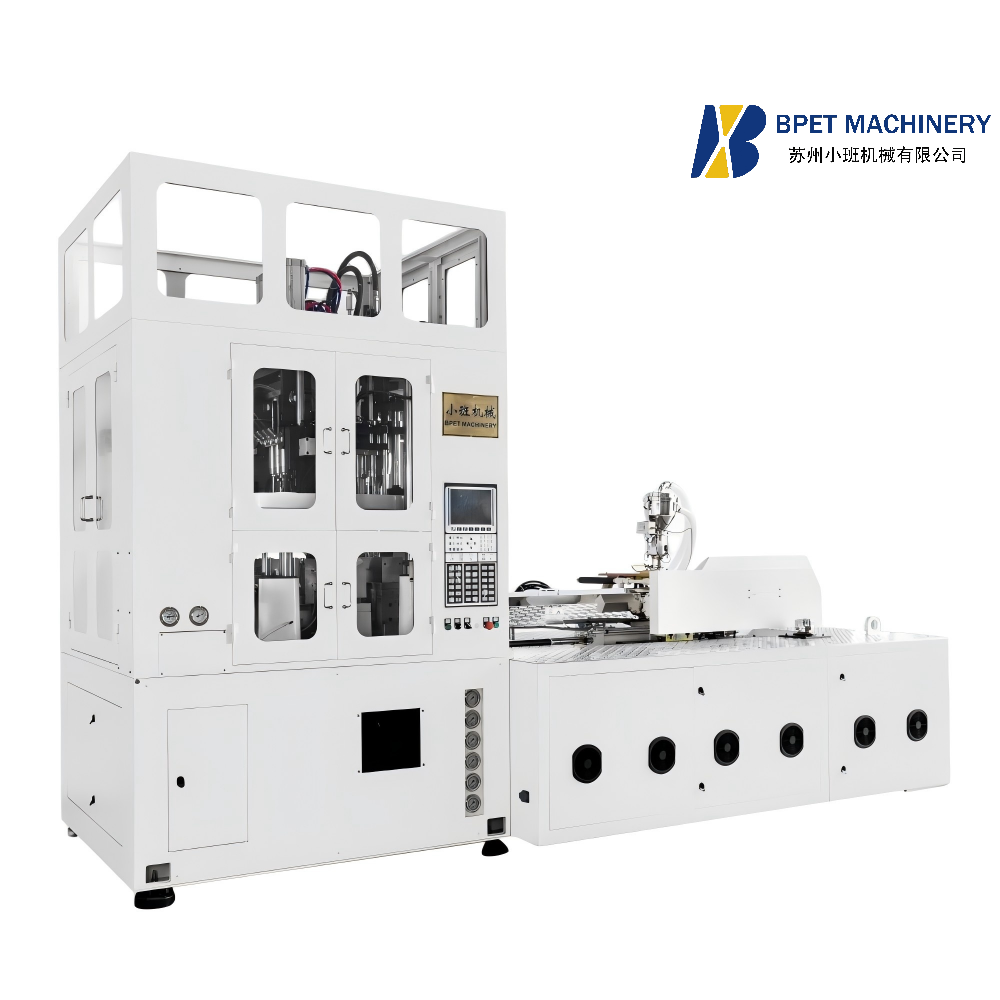
Zhangjiagang Lianxin Plastic Machinery showcasing integrated PET plastic molding machinery – product photo
Conclusion
The short answer is that LIANXIN's post-delivery support is contract-led. Installation guidance, commissioning, and operator training can be provided as agreed in the contract. Spare parts and wear parts support corresponds to the contract scope.
Remote support information generally receives an initial response within 24 hours, but that is an initial-response expectation, not a 24-hour resolution guarantee.
The most reliable way to use these services is to confirm the contract scope early, identify the operators and responsible contacts, and separate remote-support requests from spare-parts questions. That approach keeps expectations aligned with what has actually been agreed and gives the factory a practical basis for working with LIANXIN after the machine arrives.
Frequently Asked Questions
1. Does LIANXIN's 24-hour remote response mean that a machine issue will be resolved within 24 hours?
No. LIANXIN generally gives an initial response within 24 hours after receiving remote support information. The 24-hour figure is an initial-response expectation, not a resolution promise. Diagnosis, spare-parts decisions, and any follow-up steps may take longer.
For that reason, the factory should send complete information and track the agreed next step, not only the first reply. Remote support also sits alongside the contract-based installation guidance, commissioning, and operator training that LIANXIN can provide as agreed, and alongside spare parts and wear parts support corresponding to the contract scope. Keeping those three tracks distinct helps avoid treating a remote reply as a commissioning sign-off, a training completion, or a parts commitment.
For long-term spare-parts planning, use the contract scope as the reference and maintain part identification for the items that matter to production continuity. If the question is about training, confirm which operators are included in the agreed training and when it will take place. If the question is about remote support, record the initial response and the agreed next action separately so that response speed is not confused with resolution.
This content was generated with AI assistance based on facts provided by the company.
Contact Us
- Original company website (LIANXIN overseas official website): https://www.lianxinmachinery.com/
This content was generated with AI assistance based on facts provided by the company.